Scale & Strategy
together with
This is Scale & Strategy – the newsletter that maintains what psychiatrists have called “an unhealthy fixation” on business, so you can become a smarter operator!
Here’s what we got for you today:
- How to measure your customers’ “stickiness”
- Anthropic’s IPO wouldn’t be about the cash
How to measure your customers’ “stickiness”
Yes, it sounds like something cooked up in a questionable product meeting, but it’s a real metric that matters. Stickiness is simply how good you are at keeping people around because your product beats every alternative in their head.
Shopify breaks it down into the five numbers that actually tell the story:
1) Net Promoter Score (NPS)
Your quick read on customer satisfaction. Ask how likely they are to recommend you (1–10), group them into detractors (0–6), passives (7–8), and promoters (9–10), then subtract detractors from promoters. That’s your score.
2) Customer retention rate (CRR)
How often people come back. It blends stickiness and loyalty and gives you a clean benchmark against your industry. Formula: (Customers at end of period – new customers) / customers at start.
3) DAU/MAU ratio
The classic habit metric for SaaS and consumer apps. Daily active users divided by monthly active users. High ratio = you’re part of their routine. Low ratio = you’re a once-in-a-while pit stop.
4) Customer lifetime value (CLV)
How much a customer is worth over the entire relationship. Average order value x purchase frequency x lifespan. Nail this and you know exactly how far you can push acquisition spend.
5) Churn rate
How many customers walk out the door. Lost customers / starting customers. If you don’t measure the leak, you can’t patch it.
Stickiness goes up when you sharpen the product, tighten support, and personalize the experience. And yes, keeping your existing customers happy is always cheaper than chasing new ones.
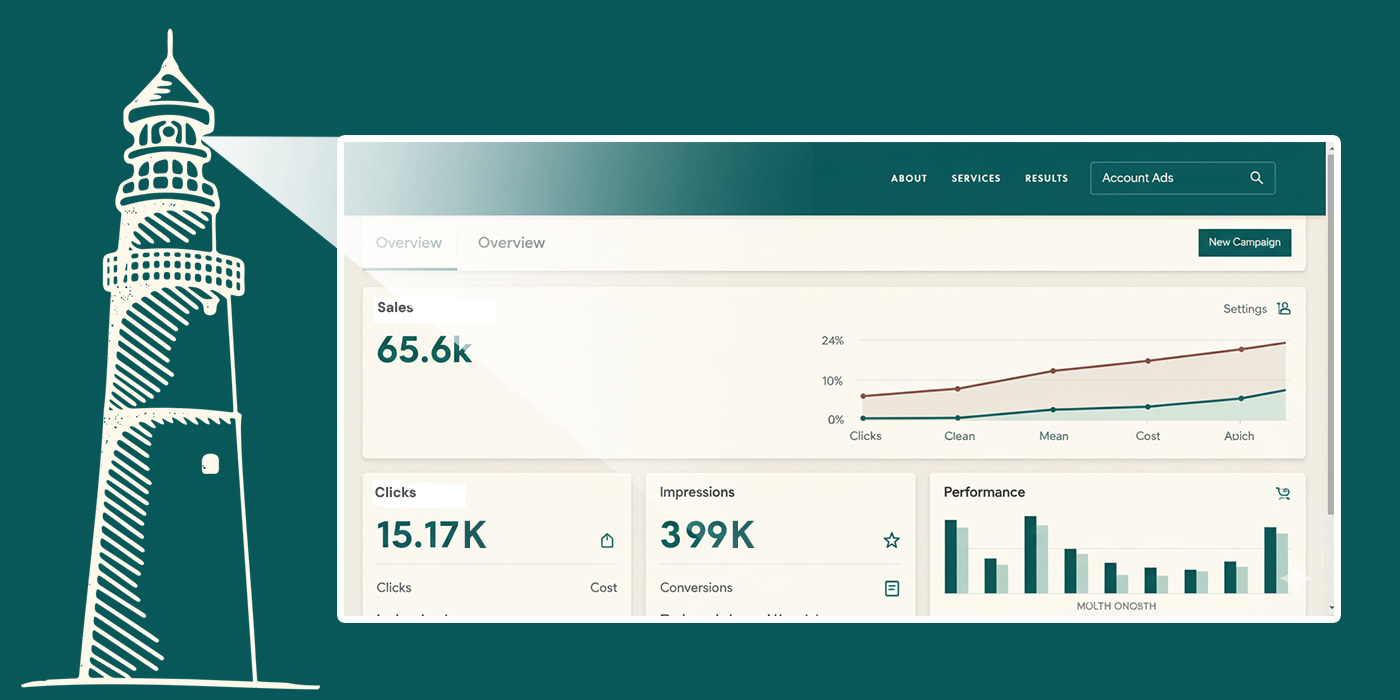
Improve your Google Ads performance—work 1:1 with an ex-Googler with 18 years of proven results
Most Google Ads agencies pass accounts to junior staff. Lighthouse Growth Consulting doesn’t.
Every campaign is built and managed directly by ex-Googler and founder Mike Kowieski, who helped build the very ad products businesses rely on today and has overseen more than $1B in ad spend.
With Lighthouse, it’s 1:1. There are no handoffs, no layers of account managers, and no wasted budget: just senior-level strategy and hands-on execution from day one.
Businesses partner with Lighthouse to:
- Eliminate wasted budget on unprofitable clicks.
- Stabilize unpredictable performance.
- Build campaigns that scale profitably over the long term.
Because the founder runs every account personally, Lighthouse only takes on a limited number of new clients each quarter.
Anthropic’s IPO wouldn’t be about the cash
Anthropic has tapped Wilson Sonsini to prep for a potential IPO, per the Financial Times, and has already held early talks with banks. If it goes forward, this thing could land among the biggest public debuts ever. Timelines are fuzzy: one source says 2026, another says not so fast.
For most AI companies, an IPO is about capital access and having liquid stock to use for acquisitions. OpenAI is dealing with its own IPO rumors for the same reason. But Anthropic is in a different spot: it doesn’t actually need the money.
In fact, Anthropic’s pitch to enterprises hinges on trust. Going public forces transparency through mandatory disclosures, which could help the company look more credible to big buyers.
Aakash Gupta summed it up on X: Anthropic is pacing toward $20–26B in revenue by 2026. The constraint isn’t capital, it’s building the trust infrastructure to sell enterprise-wide at scale.
The company isn’t profitable yet, but it burns less cash than rivals thanks to training efficiencies. It raised a big round in September and is reportedly negotiating another at a valuation north of $300B.
The paradox: Anthropic brands itself as the most safety-focused frontier lab. An IPO introduces outside shareholders who care far more about quarterly performance than existential AI risk. Founders Dario and Daniela Amodei will keep control, but public markets bring a different kind of pressure.
If Anthropic does ring the bell, it’ll be signaling something bigger: it believes transparency will do more for its long-term enterprise credibility than staying private ever could.
Was this email forwarded to you?
That’s it for today and as always It would mean the world to us if you help us grow and share this newsletter with other operators.
Our mission is to help as many business operators as possible, and we would love for you to help us with that mission!